Port Forwarding
Port forwarding lets you expose a port or multiple ports of a cloud desktop to the local network or the internet. It’s commonly used with Remote Desktop Protocol.
You can use this feature with DaDesktop Course machines (which need a private server), DaDesktop For Work, or Standalone machines. Note that the interface might look a bit different depending on the machine type.
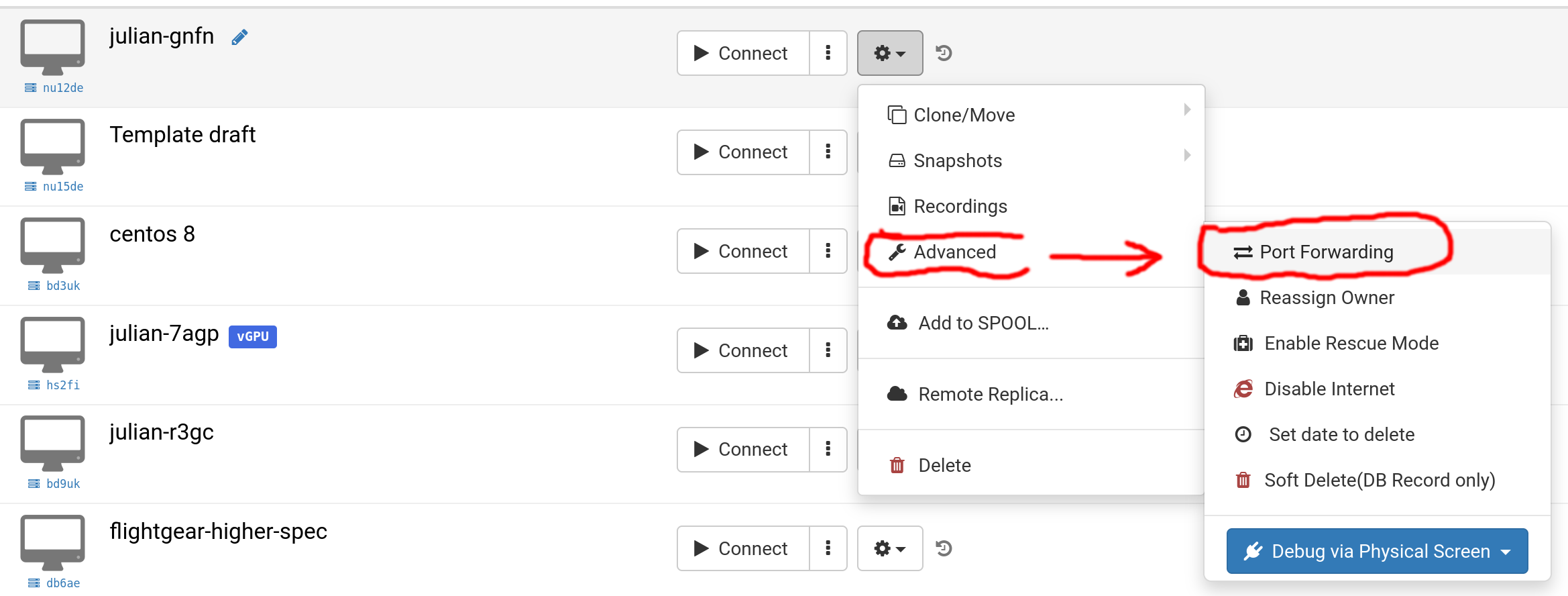
Choose 'Advanced' then 'Port Forwarding',
You can set up port forwarding with automatic or manual allocation. Automatic allocation picks the next free port on the server. Generally, auto allocation is the go-to as it simplifies things, but manual allocation lets you choose each external port from the range 10000-65500 if you need to. If manual port forwards have been added earlier, they’re kept and can be edited whenever you like.
Auto Allocation
This image shows auto allocation, alongside a previously added manual port forward using host port 11122 and VM port 22.

Manual Allocation
This example shows port 11122 used for both TCP and UDP forwarding to the cloud desktop VM’s port 22 for SSH. You can set different UDP and TCP ports if needed.

Example for Windows RDP
This example uses the original manual method, but of course you can use auto allocation too.
1. Locate your DaDesktop desktop, click "Port forwarding", then set your TCP ports for the remote connection. This is your external port number followed by 3389 (e.g., 66666:3389). Make sure you remember your port number—if you forget, just click Port forwarding again to check.

2. Submit your settings and set up a password inside your Windows DD machine, then click "Enable Remote Desktop"

3. On your local Windows device, open Remote Desktop and enter the server name plus TCP ports. (Here I'm using zh4cn, so the address is zh4cn.npg.io:xxxxx.) Under 'Show options', you can also set the resolution of your remote desktop window, for example.


3.1 To log into your remote DaDesktop, by default
"You should reset your username and password in the machine first."
Then connect to the remote desktop.

4. Now you’ll have a remote desktop session using the DD template, with sound from your own device. You can also copy-paste or output documents easily. (The small window on the left shows the DD remote desktop with audio.)
